Pages

Sunday, 8 February 2015

Music Hall

Year Listed: 2014
Location: Cincinnati, Ohio
Threat: Deterioration

Significance


Significance

Music Hall, designed by Samuel Hannaford, was built in 1878 with private money raised from what is believed to be the nation’s first matching-grant fund drive.  Music Hall is located in Over-the-Rhine, a nationally significant neighborhood that has undergone significant revitalization since its inclusion on the 11 Most Endangered list in 2006. The red brick High Victorian Gothic structure features a large auditorium, ornate foyer, offices, carpentry shop, rehearsal rooms, dressing rooms, and a ballroom.

Despite its grandeur, Music Hall is suffering from deterioration and water damage. The building is facing a critical point in its existence, and is in need of extensive repairs.  

Music Hall is owned by the City of Cincinnati and is home to the Cincinnati Arts Association, Cincinnati Symphony Orchestra, Cincinnati Pops Orchestra, Cincinnati Opera, Cincinnati Ballet, and the May Festival.


Mokuaikaua Church

Year Listed: 2014
Location: Kailua Village in Kona, Hawaii
Threat: Deterioration

Significance

Mokuaikaua Church, Hawaii’s first Christian Church, is a large stone building located in the center of Historic Kailua Village in Kona, Hawaii. Its iconic steeple stands out conspicuously among the low rise village and has become a landmark for nearly 200 years from both land and sea.

Completed in 1837 and listed on the National Register of Historic Places in 1978, Mokuaikaua Church represents the new, western-influenced architecture of early 19th century Hawaii. This stone and mortar building is believed to be built out of stones taken from a nearby heiau (Hawaiian temple) with mortar made of burned coral. Construction beams are made from Hawaiian ohia wood joined with ohia pins.

The building has suffered from earthquake damage, as well as dysfunctional and faulty electrical wiring, termite damage, and dry-rot damage to beams in the steeple and wooden window frames. A Hawaiian landmark for nearly 200 years,  Mokuaikaua Church now needs immediate attention if it is to be saved.
Visit the Mokuaikaua Church's website for more information.

Historic Wintersburg

Year Listed: 2014
Location: Huntington Beach, California
Threat: Demolition

Significance

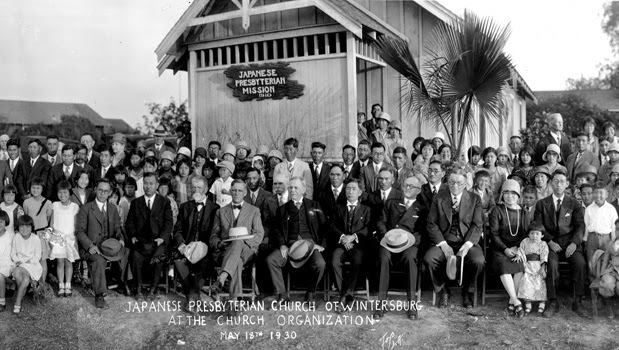
Wintersburg documents three generations of the Japanese American experience in the United States, from immigration in the late 19th century to the return from incarceration in internment camps following World War II. The site contains six extant pioneer structures and open farmland, and is one of the only surviving Japanese-owned properties acquired prior to California’s anti-Japanese "alien" land laws of 1913 and 1920. In contrast to Japanese American confinement sites from the World War II era, Historic Wintersburg captures the daily community life and spiritual institutions of Japanese settlers as they established a new life in America.
The site also chronicles the multigenerational story of the Furuta family, Japanese pioneers who cultivated a farm for close to a century, helped establish Japanese civic and business development organizations, and are a largely unrecognized part of Orange County’s history.
The property is currently owned by Rainbow Environmental Services (Rainbow), a waste transfer company. In November 2013, the Huntington Beach City Council voted to rezone the property from residential to commercial/industrial. The Council also approved a Statement of Overriding Consideration—an action which allows demolition of all six structures. Although Rainbow agreed to provide preservationists until mid 2015 to find solutions to save the historic property, demolition of the site remains a possibility.


Frank Lloyd Wright’s Spring House

Year Listed: 2014
Location: Tallahassee, Florida
Threat: Deterioration

Significance

Designed by Frank Lloyd Wright and constructed in 1954, Spring House is the only built private residence designed by Wright in the state of Florida. The novel hemicycle form of Spring House represents a late, and little known, stage in Wright’s long, prolific career. Although there are approximately 400 intact houses attributed to Wright throughout the country, only a fraction were from his hemicycle series.  Spring House was recognized as a significant structure and placed on the National Register of Historic Places in 1979, when it was only 25 years old.

Despite its unique design and its association with America’s most famous architect, the house is deteriorating and urgently in need of repairs. Exposure to hurricanes and wind storms has led to water intrusion, and the damage is visible throughout the interior of the house.  In addition, tall cypress columns have deteriorated at their bases, and insect and woodpecker damage is apparent on the cypress siding.

Spring House Institute is planning to launch a capital campaign to purchase and restore the house to its original grandeur.


Chattanooga State Office Building

Year Listed: 2014
Location: Chattanooga, Tennessee
Threat: Demolition

Significance

The Chattanooga State Office Building was constructed in 1950 in the Art Moderne style to serve as headquarters for the Interstate Life Insurance company. Its exterior features ruby granite and grayish-white limestone and a bronze frieze that is said to represent the sturdy mountain character of southeast Tennesseans. Its interior once featured a penthouse lounge, auditorium and basement bowling alley for employees’ recreation.

Today, the building is a showpiece in Chattanooga’s downtown that represents the past strength of the insurance industry in the city, as well the innovations that were taking place in the workplace in the 1950s. The state of Tennessee acquired the building in 1981 and transferred it to the University of Tennessee at Chattanooga (UTC) in December 2013. Rather than making building repairs and upgrades, UTC plans to demolish it.


Hot Dog - America’s Favorite Food

According to recent survey data obtained by the Council, Americans purchase 350 million pounds of hot dogs at retail stores - that's 9 billion hot dogs! But the actual number of hot dogs consumed by Americans is probably much larger.


Bay Harbor’s East Island


Year Listed: 2014
Location: Dade County, Florida
Threat: Demolition


Significance

Bay Harbor’s East Island is one of the largest concentrated collections of mid-century Miami Modern (MiMo) style architecture in the country. MiMo is Miami’s unique interpretation of the Modernist movement—adapted to suit the local climate and embodying the mid-century ideals of forward progress.

Several of the island’s historic buildings were designed by renowned architects including, Morris Lapidus, Henry Hohauser, and Charles McKirahan. These architects helped transition the definitive Miami architectural style from Art Deco in the 1930s into the MiMo style that emerged in the mid-20th century.

Today, Bay Harbor’s East Island stands threatened with redevelopment as large-scale construction moves throughout the area